If you're here because one of your breasts is bigger than the other, your nipples point in slightly different directions, or you've noticed something that looks "off" in the mirror, the short answer is: yes, that's almost certainly normal. Around 94% of people with breasts have some degree of asymmetry, and most of the time it's just how your body is built.
The longer answer is the one worth reading. Knowing your own version of normal is the single most useful thing you can do to spot changes that DO need a doctor. This guide walks you through the asymmetry that's common and harmless, the changes that warrant a check-up, and how to self-examine when your breasts aren't symmetrical to begin with.

Are Uneven Breasts Normal?
Yes. Mild to moderate breast asymmetry is one of the most common things in the world, and it crops up for a long list of perfectly ordinary reasons: genetics, puberty, hormonal cycles, pregnancy, breastfeeding, weight changes, perimenopause and menopause. Even your dominant arm can subtly shape the muscle and tissue on one side over time.
If you've always been a little uneven, that's your normal. If you developed asymmetrically during puberty and the difference stayed, that's also your normal. Bodies are not symmetrical machines, and breasts are no exception.
Why Is One Breast Bigger Than The Other?
The usual suspects:
- Puberty: breasts often develop at different rates and may or may not even out by the time you finish growing.
- Hormones: your menstrual cycle, contraception, pregnancy and menopause all change breast tissue density and volume.
- Breastfeeding: babies tend to favour one side, milk supply adjusts accordingly, and the result is often a more obviously uneven pair while feeding (and sometimes afterwards too).
- Surgery or injury: lumpectomy, biopsy, breast augmentation, reduction, mastectomy or trauma can all change shape and size on one side.
- Conditions like Poland Syndrome: a less common congenital cause of asymmetry, usually noticed during teenage development.
- Just because: sometimes there's no specific cause and you're simply built that way. That's fine.
If your asymmetry has been stable for years, the cause is almost always one of these. If it's new, sudden or rapidly worsening, that's the signal to get checked. More on that below.
Why Do My Nipples Point in Different Directions?
Also normal. Nipples are rarely identical twins. One can sit higher than the other, point slightly to the side, or tilt up or down compared to its partner. This is usually just how the underlying tissue settled during development, and it doesn't change anything about your breast health.
Inverted nipples (where the nipple sits flat or sinks inwards) are also common, and many people are born that way. The thing to watch for is change: a nipple that was always outward and suddenly inverts, or one that's started discharging, dimpling or crusting, should be looked at.
Is Breast Asymmetry a Sign of Cancer?
Long-standing, stable asymmetry is not a sign of cancer. What can be a warning sign is a new or sudden change in the size, shape, position or feel of one breast. That's why getting to know your own baseline matters so much.
If you're worried right now about a specific change, don't sit with it. Book an appointment with a doctor. The vast majority of changes turn out to be benign, but the only way to be sure is to ask.
How to Self-examine When Your Breasts Are Uneven
Self-exams are harder when you don't have a symmetrical reference point. The fix is to stop comparing left to right and start comparing each breast to its own previous self.Top Tips For Checking Uneven Boobs

Find your unique normal
Spend a few months getting properly familiar with your breasts: the shape, the texture, the way they sit, where any lumps or veins consistently are. Once you've mapped your own normal, anything that breaks that pattern stands out clearly.
Use a mirror
Look as well as feel. Stand in front of a mirror with your arms relaxed, then raised over your head, then with hands on hips pressing inwards. You're checking for changes in shape, dimpling, puckering, redness, swelling, or anything that wasn't there last month.
Keep a booby diary
Once a month, jot down anything you noticed: a tender patch, a lump that always shows up before your period, a change in nipple appearance during your cycle. A notes app works. So does a notebook. The point is to track patterns so genuine changes are obvious when they happen.
If the idea of self-exams feels overwhelming, you're not alone. The Health and Her app has a Breast Check tool, and CoppaFeel sends free monthly reminders if you'd like a nudge.
Normal vs Not Normal: A Quick Reference
Different breast sizes
Normal: One breast has always been bigger than the other, or the difference developed during puberty, pregnancy or breastfeeding and has stayed roughly the same since. A more pronounced difference during nursing is expected.
Worth checking: A sudden or rapid increase in size on one side, especially if it's accompanied by a lump, swelling, redness or pain.
Different breast shapes
Normal: One breast naturally sits differently on your chest, or has a different overall shape. Common after surgery, where scarred or treated tissue ages differently from natural tissue.
Worth checking: A breast that suddenly changes shape, looks swollen, or develops dimpling, puckering or thickened skin that wasn't there before.
Breast pain
Normal: Cyclical pain linked to your period, or non-cyclical pain that comes and goes with lifestyle factors like caffeine, exercise or bra fit. CoppaFeel has a useful guide to the different types.
Worth checking: Persistent pain in one specific spot, especially if paired with skin changes, redness or a lump. Breast pain on its own is not usually a cancer symptom, but it's worth flagging if it doesn't fit your usual pattern.
Uneven nipple placement or shape
Normal: Nipples that point in different directions, sit at different heights, or one that's always been inverted. This is just anatomy.
Worth checking: A nipple that suddenly inverts when it was always outward, a change in shape, any discharge (especially bloody or one-sided), crusting, a rash around the areola, or a persistent itch.
When to See a Doctor?

Book an appointment with a doctor if you notice any of the following, even if you suspect it might be down to your usual asymmetry:
- Sudden change in size or shape: a rapid or significant difference from your usual baseline.
- A new lump or thickening: any firm area in one breast that wasn't there before.
- Skin changes: dimpling, puckering, redness, a rash, or skin that looks like orange peel.
- Nipple changes: a new inversion, change in shape, or discharge from one side.
- Crusting or itch around the areola that doesn't clear up.
- Swelling under the armpit or around the collarbone.
- Unexplained, persistent pain in one specific spot.
Asking for a check-up is never a waste of your GP's time. Most things turn out to be nothing, and the small minority that aren't are far easier to treat when caught early. If you'd like more detailed guidance on self-checking, CoppaFeel has the gold-standard resource.
Living Confidently with Uneven Breasts
For most people reading this, breast asymmetry isn't a health issue, it's just a comfort or confidence issue. The visible difference can be the harder part, especially in bras and swimwear that assume two identical cups.
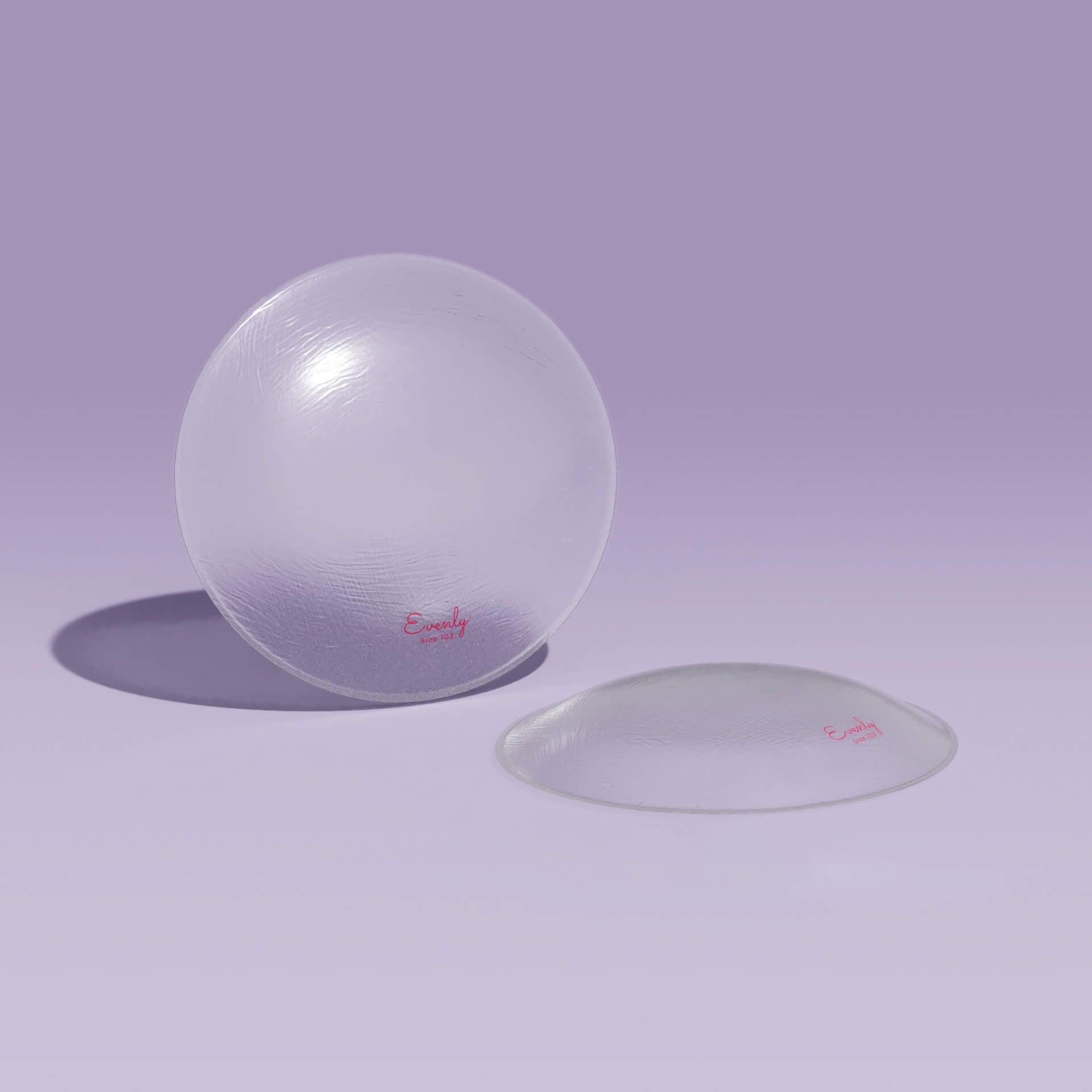
If you'd like to even out the appearance without surgery, our Bra Balancer™ slips into the cup on your smaller side. It's weight-matched silicone with a soft outer film, designed specifically for people who finish bra shopping feeling that the bras weren't made for them. Plenty of our customers wear theirs every day, others save them for nights out, holidays or photographs. Both are fine.
And it's not just confidence that our Bra Balancer™ can help with, but comfort too. A more evenly weighted bra prevents back, neck, and shoulder pain and posture issues. Plus, when you feel more confident and comfortable in your clothes and swimwear, mental state and mood can improve too.
However you choose to feel about your boobs, you're in good company. Most of the world is a little wonky. You've got this. Now go check those breasts.