Last updated: October 2026
Despite what the media may have you believe, having one breast bigger than the other is perfectly normal. In fact, many studies show all women have some degree of natural breast asymmetry. We explore the causes of uneven boobs and solutions to help.

Let’s face it, bra shopping can be a pretty torturous experience, right? A seemingly never-ending quest to find that mythical unicorn that is the perfectly fitting bra. Especially when you have one boob bigger than the other!
For many, finding lingerie that fits well can be a painful experience, quite literally! An uneven chest can lead to neck and back problems as well as posture issues, which can then be exacerbated by an ill-fitting bra… it makes us dizzy just thinking about the circles we can go in.
Evenly has been founded by a fellow member of the uneven titty committee to help make our boob-related inequality a lot more manageable, with a simple solution which brings balance to your bra. Hoorah!
Is It Normal to Have One Breast Bigger Than the Other?
Yes, completely. Most women have some degree of breast asymmetry, and for the vast majority it’s simply a natural variation, in the same way our faces, hands or feet are rarely perfectly symmetrical. It only tends to need medical attention when the change is sudden, or comes with other symptoms (more on that below!).
Breast Asymmetry Is Perfectly Normal
Despite what mainstream media, bra manufacturers and lingerie advertising execs may have you believe, breast asymmetry is perfectly normal. In fact, many studies show all women experience some degree of natural breast asymmetry, ranging from barely perceptible differences to inequalities of a few cup sizes or more. Some size differences rarely change post-puberty, whilst others fluctuate constantly day to day, month to month, or even hour to hour (holla to all the breast-feeding mums!). Whilst many of us here may have the imbalance in common, there are a plethora of reasons why people develop one breast larger than the other.
What Causes Breast Asymmetry?
Hormonal Changes
Our hormones are one major culprit. During puberty, pregnancy, breast-feeding, menopause or throughout the monthly cycle, our bodies change like the seasons and this can manifest most visibly in our breasts. Our breasts are home to a significant number of our body’s fat cells, so lifestyle changes and weight gain or loss will also often lead to big jumps in bra balance too.
Genetics and Natural Growth Variations
For many of us there is no obvious cause, it is simply nature in all its beautiful mystery and uniqueness. Family history can play a part too: if your mum or sister has noticeably uneven breasts, it’s likely you inherited the same tendency. If your left side is the fuller one, you’re in good company, as that’s the more common way round. We like to think it’s because we have especially big hearts.
Health Conditions
For a smaller number of people the difference is much more significant. Several health conditions can cause larger imbalances, such as Poland Syndrome, a congenital condition where pectoral muscles do not develop fully on one side of the body, leaving the overlying breast on that side much smaller. There is also Breast Hypoplasia, also known as Tubular Breasts, which occurs most commonly in puberty and can affect the growth of one or both breasts. Additionally, Amastia (or Amazia) can also affect breast tissue development.
Breast Cancer Surgery and Treatment
For others uneven breasts are the result of surviving breast cancer, something undoubtedly to be celebrated, but which may have resulted in breast tissue being removed, with mastectomy, lumpectomy, reconstruction or therapeutic mammoplasty surgery resulting in larger imbalances amounting to a full breast or several cup sizes’ difference.
Health Impacts of Breast Asymmetry
Breast asymmetry is more than just a cosmetic issue; it is a health issue with very real physical and mental consequences. It can cause great psychological distress and feelings of self-consciousness and anxiety. Often these differences in breast size are not noticeable to others, but of course there is always a tendency to notice these things more in our own bodies (ain’t that the truth!).
As if feeling self-conscious isn’t enough, the imbalance might also lead to that gorgeous bra you just bought not quite fitting properly. Our lopsided bosom might either create a bulging ‘muffin top’ boob on one side, or a huge crumb-collecting gape on the other. Not to mention straps that dig in more on one side, a band that slides up, an underwire that pulls over and digs in, and all the neck and shoulder pain to go with it.
When Should You See a Doctor About Uneven Breasts?
Long-standing asymmetry, the kind most of us have had since puberty, is nothing to worry about. But it’s worth getting checked by a doctor if you notice:
- A sudden change in size or shape, especially in just one breast
- A new lump, thickening or hard area
- Skin changes such as dimpling, redness or puckering
- Nipple changes, including new inversion or discharge
- Persistent pain that isn’t related to your monthly cycle
None of this means something is wrong, and asymmetry on its own is never a symptom. It’s simply worth getting anything new or sudden checked out, the same as you would with any other change in your body. Organisations like CoppaFeel! have good guidance on what to check for and how often.
How Evenly Can Help

Some people opt for cosmetic breast surgery, which may be something you are considering. But if you want to avoid the surgeon’s knife and still give your girls the balanced support they need, Evenly has your back (and your neck and shoulders)!
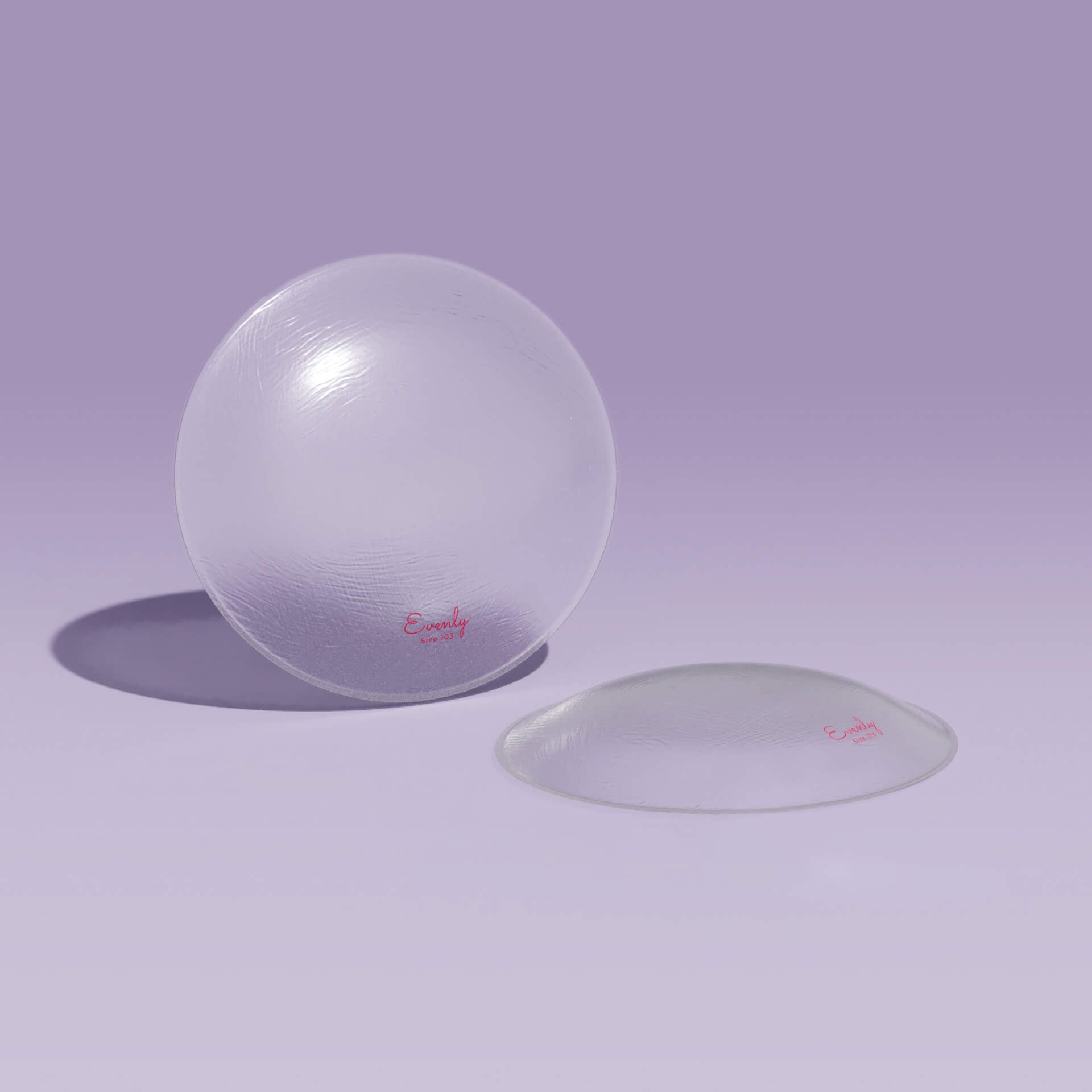
Our solution for getting a good bra fit for uneven breasts is to buy a bra you love which accommodates your fullest breast well and add in your Evenly bra insert to restore balance to your bra. Yep, it really is that simple! The shape and fluid feel of the silicone provides a smooth, natural and balanced appearance. It’s also superbly weighted to mimic the weight of the missing natural breast tissue, meaning your bra can hold and distribute the weight of your breasts more evenly, clever huh?
Get It Off Your Chest
Whatever the cause of your breast asymmetry, you are certainly not alone and Evenly is here to support you and to restore balance to your bra.
If you’d like to share your experiences with other members of The Uneven Titty Committee™ you can do so in our private and safe breast asymmetry support group on Facebook.
Team Evenly x
Frequently Asked Questions
Is it normal to have one breast bigger than the other?
Yes. Most women have some degree of natural breast asymmetry, and for the vast majority it’s simply a normal variation with no underlying cause.
Does breast asymmetry get worse over time?
It can change throughout life, particularly during puberty, pregnancy, breastfeeding and menopause, when hormones are shifting. For most people it settles rather than progressively worsening.
Can uneven breasts be a sign of cancer?
Long-standing asymmetry on its own is not a sign of cancer. A sudden change in size or shape, a new lump, or skin or nipple changes should always be checked by a doctor.
Will losing or gaining weight even out my breasts?
Weight changes can affect breast size, but they don’t reliably even out asymmetry, and can sometimes make an existing difference more noticeable.
Can breast asymmetry be fixed without surgery?
Yes. A well-fitted bra combined with a silicone bra insert, like an Evenly Bra Balancer™, can even out the shape and weight of your bust without any surgery.
Do I need a different bra size for each breast?
Bras are made symmetrically, so instead of buying two different sizes, the best approach is to buy a bra that fits and properly supports your larger breast well and use a bra insert to fill the smaller cup. See our guide to measuring your bra size when you have uneven breasts for the full method.